••• CLICK HERE TO CATCH UP ON AMT287 •••
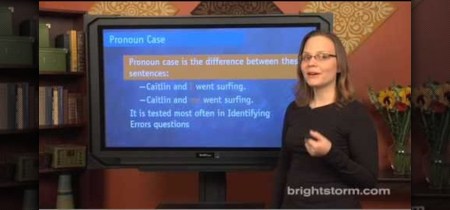
Following Joe’s complaint about his slapdash-talking wife in AMT287, let’s tackle this question from Joan from Fremantle:
I have a friend who is a self-proclaimed ‘grammar Nazi’.
Having completed a general arts degree at a parochial university in the 1970s she considers herself to be an expert in correct English syntax, diction and style and takes great satisfaction in pointing out and correcting other people’s mistakes.
I know her well and over our long friendship have come to understand that she is quite sensitive about being judged by others, having struggled over the years with feelings of general inadequacy. I think her censoriousness about grammar reflects that this is one area where she clearly feels confident and empowered, and can judge people instead of feeling judged. For this reason, although I am more qualified and experienced in this area than she is – as a professional editor who has done post-graduate study in linguistics including descriptive as well as traditional grammar, philology and the history of the English language – I have always kept my mouth shut when she strays onto shaky ground, as prescriptive grammarians often do.
For 30 years I have even refrained from correcting a bad habit she has, which is to refer to her husband and herself as “James and I”, even when they are the object of the sentence. For example, she will say, “The film didn’t appeal to James and I”, or “They gave James and I this advice…” and once even signed a card to us “With love from James and I”.
Here’s the problem: as a Facebook user she has started frequently posting humorous instances of grammatical errors using such networks as ‘Grammarly’, sometimes several times a day. I am starting to worry that someone else is going to point her own imperfect command of grammar out to her, possibly publicly, and definitely very hurtfully.
Answer me this: now that she is so publicly proclaiming her grammatical supremacy, is it time for me to come clean to my friend about her overuse of the nominative case when referring to her and her husband? How can I tactfully point this solecism out now, after all these years of putting up with it? Or should I just continue to ignore it (hoping that no one else will be so unkind as to shatter her self-image) and let pronouns be pronouns?
This is actually a rather sweet motive for picking up someone’s linguistic solecisms. Joan herself can clearly tolerate the solecism, having not mentioned it for thirty years.
She may be worrying unduly about other people correcting her friend, because this particular pronoun problem is so common that even teacher extraordinaire Susan Kennedy falls prey to it.
But here’s an idea, Joan: since I sound off about this very issue in AMT287, play the episode to your friend! Pretend you really want her to hear one of the other questions in the show – perhaps she has an interest in human statues? – and hope she absorbs the information.
If she does not, manufacture a conversation in which you cast yourself as the pronoun-messing fool. “Gosh, friend, I found out something the other day – did you know the pronoun formulation is supposed to be ‘Joan and ME‘ in all non-nominative uses? I’ve been using it wrongly all these years, and now I feel like such a tit!”
Readers, if you have any superior suggestions for tactful grammatical corrections, please go to the comments to share them with Joan and I me.















 Answer Me This! Podcast